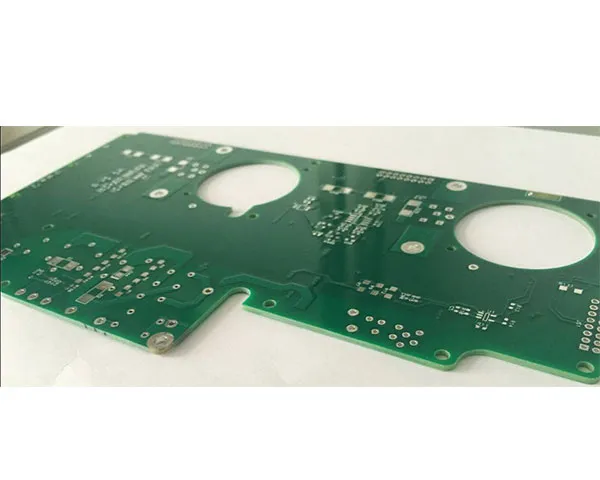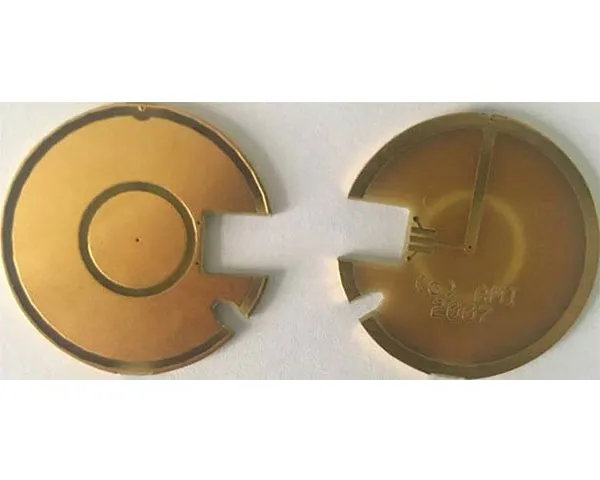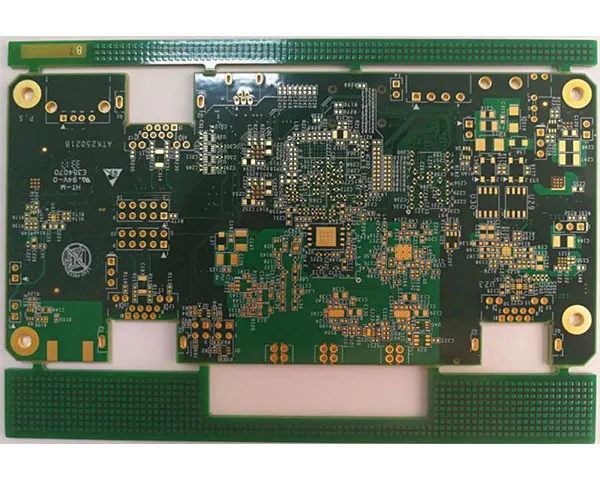
A prototype order is decided by the calendar rather than by the board. The DFM review, the panelisation and the traveler are the same whether the quantity is five pieces or five hundred; what changes is where the panel sits in the queue and how much of the process is run in parallel.
What the quick-turn service covers
- Bare boards from 1 to 38 layers — 0.06 mm line and space, 0.15 mm mechanical or 0.1 mm laser-drilled holes, 0.5–20 oz copper and panels up to 580 × 1900 mm.
- Stencils within four hours — cut and delivered so paste printing does not wait on a second supplier.
- Prototype and small-volume assembly — four SMT lines at six million chips per day and three DIP lines at 1.6 million pieces per day, for orders that have to come back populated.
- Engineering review — DFM, DFA and DFT before the quotation is fixed, so a stack-up or clearance problem is found while it is still a file rather than a panel.
Where the days actually go
Most of the elapsed time on a prototype is not drilling. It is the DFM question that comes back two days after the files were sent, the stack-up that has to change to hit the impedance, the finish that has to be ordered in. Sending a complete package at the start — Gerber, stack-up, impedance targets, finish, quantity and the target date — is the single largest saving available, and it costs nothing.
Where a quick-turn clock is actually spent
A prototype does not come back faster because it is small. It comes back faster because fewer steps in the sequence have to wait for each other, and the list below is the factory side of that sequence.
- A two-layer board barely stops — drill, image, etch, finish, rout and test each follow the last without the panel leaving the line, so the elapsed time stays close to the process time.
- Every lamination splits the run in two — a multilayer panel has to be pressed before it can be drilled, and a press load closes on its own schedule; inner layers that finish in the morning do not go into the press that morning. Another press is another window rather than more machining.
- Finish and electrical test run by batch, not by board — a plating or immersion line starts when it has a load, and test starts when the panel has a program, and neither can be pulled forward by working harder on one panel.
- The order of the steps is fixed — hard gold and gold fingers are applied after routing, and an impedance coupon can only be measured after lamination; a design that needs both carries a longer chain than its layer count suggests.
That is why the fastest slot is quoted at 2–6 layers here and moves to four or five days at 8 and 10: the extra passes are extra queues. Compressing a queue is a scheduling decision, and it can only be made for the operations that are still ahead of the panel — which is also the reason a stack-up question answered before the panel is released is worth more than any amount of chasing afterwards. Builds with several presses are described on the multilayer PCBs page.
From prototype to production
The prototype and the medium-volume order are built on the same lines with the same published limits, so a design that passes at prototype quantity does not have to be re-qualified for production. Panelisation is drawn once and reused, the same surface finish carries across to the larger order, and the assembly programme written for the prototype is the one that runs in volume — so the finished unit ships as an assembled product rather than as a board plus loose parts.
Price list and lead times
The published list below is the starting point for a standard FR-4 prototype, priced for panels up to 150 sq.inch (under 0.1 m²) at each layer count:
| Layers | Price (up to 150 sq.inch) | Fastest lead time | Standard lead time |
|---|---|---|---|
| 2 | 60 USD | 24 hours | 5 working days |
| 4 | 120 USD | 48 hours | 6 working days |
| 6 | 200 USD | 72 hours | 7 working days |
| 8 | 300 USD | 96 hours | 8 working days |
| 10 | 400 USD | 120 hours | 10 working days |
| Above 12 | Case by case | Case by case | Case by case |
Small to middle volume runs on the same lines, with the queue set by the panel area:
| Layers | Standard lead time (2–100 m²) |
|---|---|
| 2 | 12 working days |
| 4 | 14 working days |
| 6 | 16 working days |
| 8 | 18 working days |
| 10 | 20 working days |
| Above 12 | Case by case |
Both tables are examples, and the figures are confirmed on the formal quotation for the actual stack-up, surface finish, copper weight and quantity. Sample and prototype orders can be quoted as a package; volume orders are priced from the data package once the Gerber set, BOM and quantity are fixed. The fastest slot depends on the queue when the complete data package arrives, and runs to three days at 2–6 layers; at 8 and 10 layers the same slot is four to five days, with a 2-working-day expedited window at a premium.
What an expedited slot is actually charging for
The gap between the standard and the expedited figure on one Gerber set is not machine time. It is what the plant gives up in order to hold a place open for that panel.
- Someone else waits — an expedited build is inserted ahead of work that is already scheduled, so the premium buys position in the queue rather than a faster machine; the same panel sent on a normal date is priced at the standard figure.
- A changeover is charged by the occasion, not by the board — drill program, plating load, imaging tooling and test program all change between two designs, so three small batches spend more on changeovers than one batch of the same total area. Repeating an identical order is cheaper for that reason, even when the second order is also expedited.
- A press window costs more than a routing window — an hour of press capacity displaces a whole inner-layer set, while an hour of routing displaces one outline, which is why the premium grows with the number of laminations rather than with the panel area.
- Tooling is kept, not consumed — stencils, the test program and the assembly program belong to the design: they are paid once, they are used again on the next order of the same revision, and they do not return as a line item while the geometry is unchanged.
- Inspection is not the part that gets shortened — first-article checks, hole and finish measurement and the electrical test coverage stay as they are on a normal date. An expedite buys a place in the queue, never a step removed, and quoting urgency as a reason to test less is a sign of the wrong supplier.
Two expedited quotations should therefore be compared on which part of the chain each one shortens, not on the total: the cheaper of the two may simply be shortening a step that was never on the critical path. Prototype quantities that go on to be assembled follow the same rule on the express prototype PCB assembly page, where the queue is set by part arrival rather than by press windows.
Getting a quotation
Send the Gerber set with the layer count, board thickness, copper weight, surface finish and quantity, plus the BOM and pick-and-place file where assembly is wanted. The process limits used for the quotation are listed on the capability page, and enquiries are answered in the order they arrive, with the delivery date confirmed with the price.
Prototype quantities can continue straight into assembly; the China PCB assembly page covers express builds, sourcing and box build in the same plant.