One order instead of several suppliers
Electronics assembly is usually split up: bare boards from one vendor, parts from a distributor, assembly at a third, testing at a fourth. Each handover adds packing, freight, a fresh incoming inspection and a schedule that slips independently of the others — and when a finished assembly fails test, the first question is which supplier owns the defect.
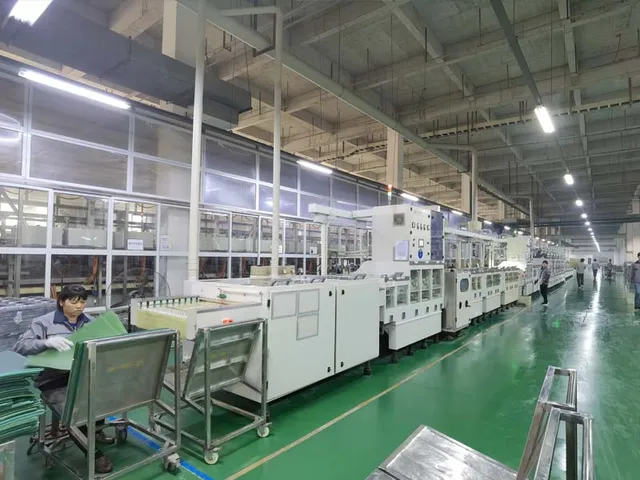
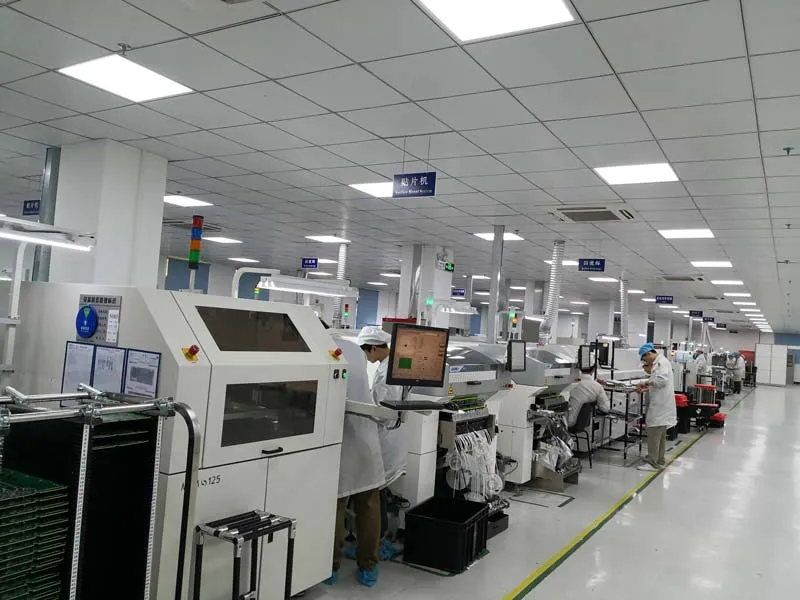
In a turnkey order that whole chain runs inside one plant: boards fabricated, components bought by the sourcing team, surface-mount and through-hole assembly run on the same lines, then inspection, test, coating, firmware and packing. One quotation, one schedule, one owner.
Full turnkey and partial turnkey
- Full turnkey — the customer sends the design data and receives tested product. Fabrication, parts, assembly, test and packing are all bought and built here.
- Partial turnkey — the customer supplies the bare boards, or selected critical components, and everything else is handled here. This is common where the customer already holds stock, must control a specific component themselves, or wants the design to remain with their own fabrication partner.
Both models run on the same lines with the same inspection gates, so switching between them does not change how the boards are built.
What stays inside the plant
Fabrication and assembly sharing one roof shortens the loop that matters most: when the assembly team finds a footprint or panelisation problem, the fabrication team is a walk away rather than a shipment away. Stencils are cut on site within four hours, prototypes come back in 1–3 days and medium volume in 4–10 days.
Inspection runs along the line — SPI before placement, AOI after reflow, X-ray for BGA and QFN joints — then in-circuit or flying probe test and functional test against the customer's procedure. Firmware is loaded and the product configured before packing, so what leaves the plant is a working unit rather than a populated board.
Where the model fits
Full turnkey suits programs with a defined product and a schedule to keep — the fewer interfaces, the fewer ways the schedule can slip. Partial turnkey suits programs where part of the supply chain is fixed by contract, by a customer's existing stock, or by a component that must be bought by the customer themselves. Consignment assembly covers the case where the customer supplies all the electronics.
For products that need an enclosure, harness or accessory fitted before shipping, the box build service completes the unit; where the design is new, the prototype service validates the build before volume starts.
When turnkey is the right order, and when only a piece is
Turnkey is a scope, not a default. The question that settles most enquiries is how much of the chain is actually missing.
- Purchasing and assembly are both missing. Nothing else needs deciding: parts, boards and the build are bought as one order, and one plant answers for the chain end to end.
- Only the build is missing. A customer with a fabrication partner they trust keeps it and buys the partial turnkey model — boards arrive as consigned stock, and parts, assembly and test are handled here.
- Only the buying is missing. Where nothing would be fabricated or assembled, the enquiry is a purchasing one; turnkey begins once there is a board or a unit that has to be built.
- The unit, not the board, is the deliverable. Once a harness, an enclosure, a firmware set or retail packing has to be fitted, the order becomes a final assembly programme, whatever share of the board work stays here.
- Only a verdict is missing. Screening, burn-in, failure analysis and repair confirmation are PCBA testing and quality assurance — an order in its own right rather than a stage of this one.
Two boundaries are worth stating plainly. "What would this cost?" with no BOM revision, quantity or test specification attached does not produce a price, it produces an assumption about scope. And while the design is still moving, a quotation describes a board that will not be built, which is why DFM review comes before the number rather than after it.
What settles the remaining cases is who carries the material risk. A full turnkey order transfers it: the plant answers for lead time and for what arrives at the feeder. A partial order leaves it with the customer, whose parts the plant builds around but does not replace.
What a turnkey quotation is built from
A turnkey price is not a unit rate applied to a quantity. Six blocks make up the number, and each of them can move on its own.
- The material block. Parts are priced against one BOM revision and one quantity. Lifecycle status and minimum packaging decide how long that price can be held, and a substitution agreed in writing changes it; a quotation that keeps the original part numbers is stating an assumption, not hiding one.
- The one-off engineering. Stencils, placement programmes, first-article records and test fixtures are paid once and carried by the lots that follow, so how they are spread across the batch has to be read alongside the unit price.
- The build itself. Placement count, single or double-sided reflow, the share of through-hole work and any selective or hand soldering decide the labour — and labour is where two apparently identical assemblies start to differ.
- The test and yield assumption. Coverage and acceptance limits set how long each board holds a station, and the quotation has to say who carries the rework; a test programme quoted without its limits is not yet comparable with anything.
- The responsibility boundary in a partial order. Consigned parts carry no material price, but shortage, incoming quality and substitution decisions stay with the customer, and a missing part becomes a new price and a new date rather than a nudge to the existing one.
- The basis of comparison. Same BOM revision, same test specification, same delivery terms — otherwise a price difference between two suppliers measures two different scopes rather than two different margins.
A turnkey quotation is therefore worth reading for its assumptions as much as for its total. Fabrication, sourcing, assembly, test and final assembly are each quoted as their own service on the PCB assembly services overview, and the turnkey total is only as firm as the blocks behind it.
Getting a turnkey quotation
Send the Gerber set, the BOM with manufacturer part numbers, the pick-and-place file, the order quantity, any test program or functional test requirements and the delivery schedule. Turnkey quotations are issued within 24 hours; process limits are on the capability page and the issued certificates on the certifications page.