One floor, from prototype to volume
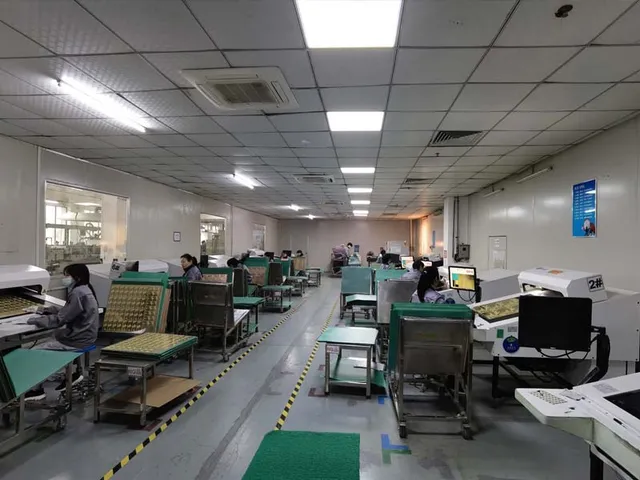
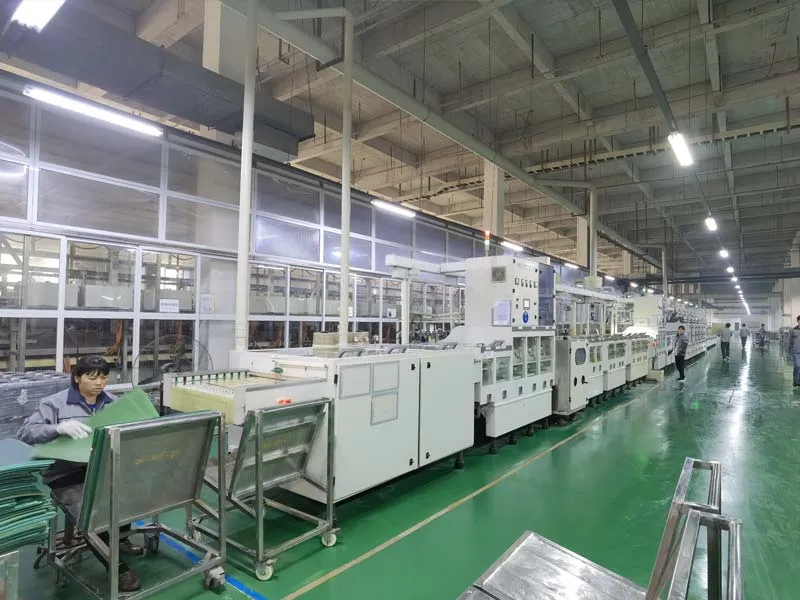
Volume is a batch size, not a different process. The placement programs, stencil design, AOI recipes and X-ray settings signed off on the first boards are the ones the production run uses, which is why the same four SMT lines and three DIP lines take both a fifty-piece batch and a mass-production order — and why a design that behaved on the prototype behaves in the field.
Three commercial models run on those lines:
- Full turnkey — the Gerber set and the BOM are all that is needed; parts are sourced, boards fabricated, assembled, tested and packed.
- Partial turnkey — the customer supplies the bare boards, or selected critical components, and everything else is bought and built here.
- Consignment — the customer supplies the components; assembly, inspection and test stay with us.
Components are bought by the sourcing team against the whole BOM, so a high-mix order does not turn into a list of minimum-order charges and separate freight bills.
Which orders belong here, and which belong next door
This page covers the board: parts bought or supplied, boards fabricated where the order needs it, every component placed and the assembly tested before it ships. When the deliverable is a working board on its own, the order belongs here.
Three other shapes do not:
- A finished unit — cable harness, enclosure, firmware, retail packaging — is an assembly-level job rather than a board-level one, and the box build service takes it.
- Boards that are already built and only need screening, burn-in, failure analysis or rework go to PCBA testing and quality assurance, where assembly is not the deliverable.
- An order whose real problem is parts — a line with a long lead time, an end-of-life notice, an incomplete approved-vendor list — is a sourcing question before it is an assembly question.
Two further boundaries are worth naming. A handful of boards that exists to settle a design decision is a prototype question, answered by a fast build loop rather than by a production run. A design with no Gerber set, no bill of materials and no placement data yet is an engineering question, and the DFM review below is where it gets settled — not the quotation.
What decides the routing is not what the order is called but who carries the risk of a board that fails at the end of the line. Where that risk sits with the assembler, the order is a board-level one.
Engineering review before production
Design for manufacturing (DFM) checks the customer's own documents — Gerber files, bill of materials, assembly drawings and circuit diagrams — for anything that would slow the line or lower the yield. Panelisation is designed, the component list is verified before parts are ordered, and a solder mask thickness is recommended for the output rate the design needs.
Design for testing (DFT) covers the other half: where test points should sit, which probe types and fixtures the test needs, what the tester can reach, and whether the test procedure detects the failures the product actually suffers. Both reviews run before the first article, not after the first failed lot.
What the floor holds
Capacity is four SMT lines placing six million chips per day down to 01005 and 0201 packages at 4 mil (0.1 mm) pitch, on one or both sides of the board, plus three DIP lines handling 1.6 million through-hole pieces per day. Stencils are cut on site within four hours; prototypes come back in 1–3 days and medium volume in 4–10 days, with mass-production timing set by the BOM and the component lead times inside it.
Inspection follows the board along the line — SPI before placement, AOI after reflow, X-ray for BGA and QFN joints — then in-circuit or flying probe test and functional test against the customer's procedure. Rework, including BGA rework and re-balling, is done in-house and verified by X-ray rather than being returned to the customer.
What sets the price of a volume build
Assembly labour is rarely the largest line in a volume quotation; the bill of materials usually is. Every line on it carries a lifecycle state, a minimum pack size and, more often than not, a second-source question, and those three settle both the price and how firm it stays. A figure built on a part that has just gone end-of-life is a figure with an expiry date on it.
The one-time work is what a repeat order should stop paying for: stencils, placement programs, AOI recipes, test fixtures and the first-article records that prove the line is set up right. Each of them is paid once and reused, so a requirement split into small releases spreads that work across fewer boards every time — which is why the third repeat order is cheaper than the first.
Panelisation moves cost as well. How the boards sit inside the panel decides how much material goes to rails and waste, how many placements each machine cycle makes, and whether the board can run through the line at all without tooling built for it.
The test plan decides much of the rest. Testing every board or testing a sample, how many fixtures the test needs and how long a board occupies the tester all convert straight into cost per unit, so the test specification belongs in the quotation rather than in a change request afterwards.
Two quotations compare only on the same revision of the bill of materials, the same test specification and the same release pattern. A figure issued without the placement data or the test limits is an estimate, and the missing part returns as a change once the order is placed.
The order model decides who supplies the parts, and with that where responsibility stops: on a consignment order the price carries no material, but shortages and the incoming quality of those components stay with the customer.
Getting a volume quotation
Send the Gerber set, the BOM with manufacturer part numbers, the pick-and-place file, the quantity and the required schedule. BOM quotations are issued within 24 hours; the process limits used for that quotation are on the capability page, and the issued certificates on the certifications page.