Why prototypes run on the production lines
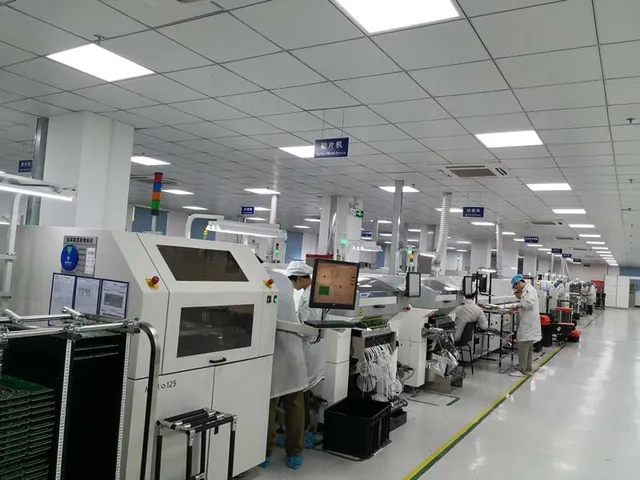
An express prototype is not a hand-built sample. The same four SMT lines and three DIP lines that carry volume production build the first fifty boards — the same placement programs, the same AOI recipes and the same X-ray checks — so the board the design team tests is the board the production order will produce.
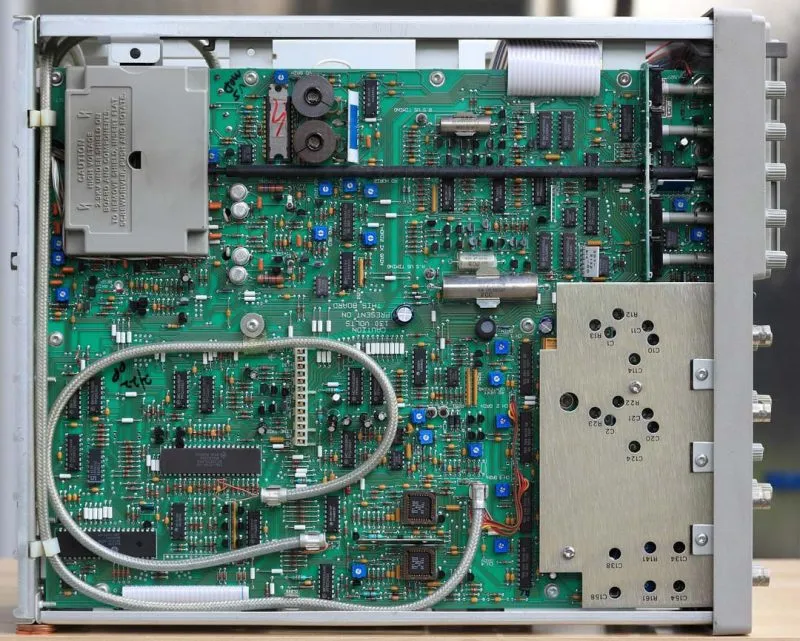
That matters most on dense designs. Prototypes down to 01005 and 0201 packages at 4 mil (0.1 mm) pitch are placed here rather than at a hand-assembly bench, and BGA and micro-BGA parts, the hardest to rework without damage, are assembled on the same equipment the volume build uses.
When the bench is the better answer
An express prototype earns its place when the boards have to prove the process rather than the circuit. If the only question is whether a net is routed correctly, a bench build answers it sooner and the data package can keep moving with the layout. The line starts paying for itself the moment the design has to be shown at production quality, because it is the only route that returns a first article signed off against the placement programs, the inspection recipes and the reflow profile the volume order will run.
- The design still changes on every revision — the placement program lives with the machines, so a revision that touches pads or apertures costs a new stencil and a new first article, not a new program.
- Package density rules out hand work — fine pitch, BGA and micro-BGA parts and boards that mix surface-mount with through-hole are where hand assembly stops being representative and where joints have to be inspected rather than looked at; the test and quality pages describe the coverage behind it.
- Coverage has to be demonstrated — where the prototype has to show in-circuit or functional coverage, fixtures and test points belong in the data package from the start, because a point added once the boards exist is a board change.
- The lot is also the pilot lot — where a frozen design meets a short delivery window, one larger prototype lot that covers pilot quantity avoids paying for tooling twice; the assembly overview sets out what each route holds.
What keeps the turnaround short
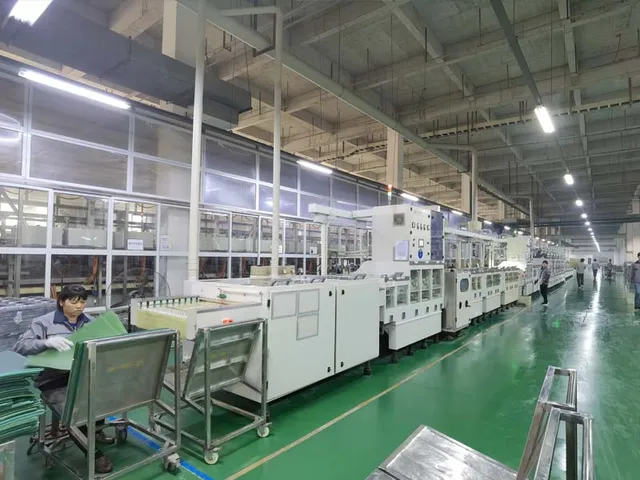
- PCB fabrication and assembly on one site — the bare board does not wait for a courier between the fabrication floor and the assembly floor.
- Stencils cut in-house — laser-cut and delivered within four hours.
- Components bought against the whole BOM — including the parts where a prototype quantity would normally attract minimum-order charges.
- DFM and DFT review before the first article — missing footprints, clearance problems and unreachable test points are found on paper, not on the line.
- First-article inspection — every feeder, nozzle and vision setting signed off before the lot runs.
Prototype lots come back in 1–3 days, with urgent work fitted in inside 24 hours where capacity allows, and assembly quotations issued within 24 hours — 12 hours for urgent projects.
What the prototype order covers
PCB fabrication, components sourcing, surface-mount and through-hole assembly, SPI and AOI, X-ray for BGA and QFN joints, in-circuit or flying probe test and functional test against the customer's procedure, then packing. A turnkey order needs the Gerber set and the BOM; in a consignment order the components are supplied by the customer and everything else is handled here.
Where the design is still moving, the same lot can be re-run after each revision: the placement program is already in place, so only the changed parts need a new stencil and a new first article.
Where a prototype order stalls before the line starts
Few prototype delays are line problems. Most of them are data problems that only surface at the first article.
- A bill of materials that no longer matches the design — approved substitutes and parts left unpopulated have to be declared on the bill of materials and on the assembly drawing together, or the first article is built to one document and checked against another.
- Origin or rotation mismatched between the placement file and the Gerber — the coordinate file has to share the origin, the units and the top-or-bottom convention of the fabrication data, otherwise the whole lot lands off its pads before anyone sees it.
- Apertures carried over from an older revision — apertures are opened from the fabrication data that is actually being built, since paste volume suiting one pad starves the next and leaves a joint only X-ray reports.
- Test points that cannot be reached — reachability is agreed while the data package is still open, because a point covered by a part or closed by solder mask turns into a board revision.
- Parts arriving in the wrong presentation — moisture-sensitive devices, cut tape and reels the feeder cannot take turn into a bake or a re-reel, and the kit check is where that is discovered, not the line.
A lot that outgrows the prototype stage moves on to small-batch and volume assembly, where the same programs are reused instead of rebuilt.
What to send with the enquiry
The Gerber set, the BOM with manufacturer part numbers, the pick-and-place file, the quantity, any test program and the required lead time. Process limits used for the quotation are on the capability page, and the issued certificates on the certifications page.